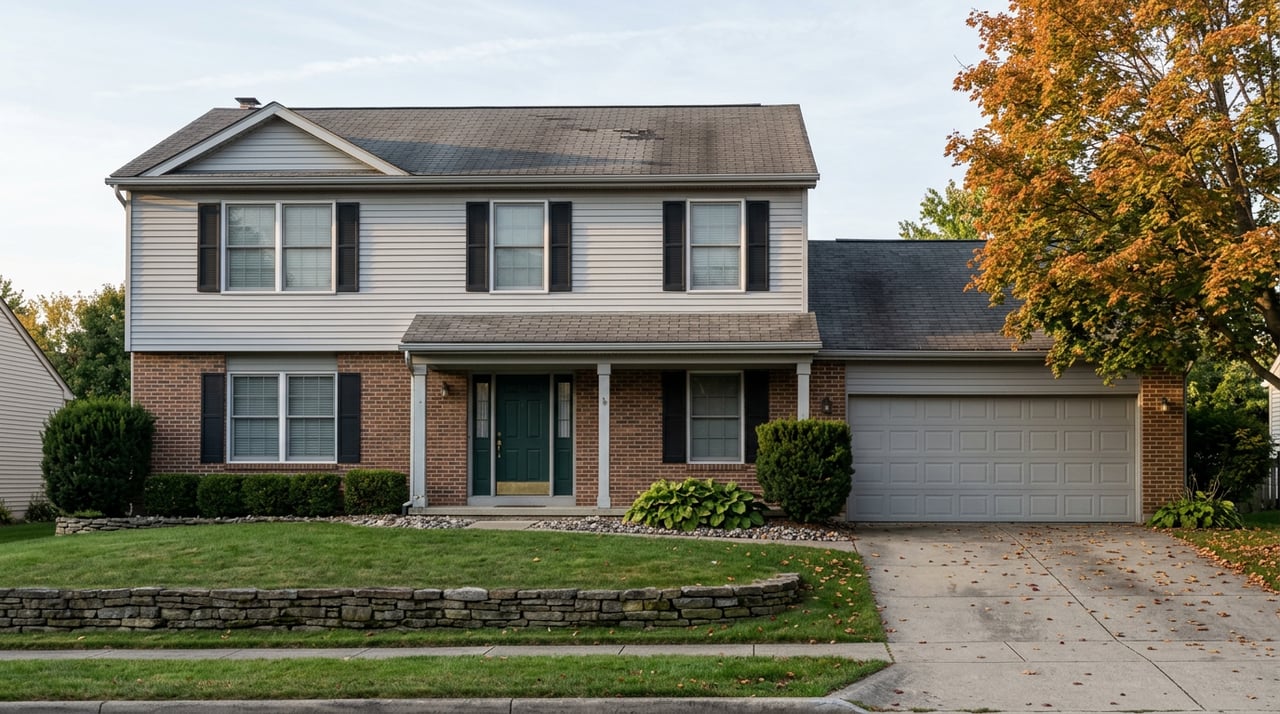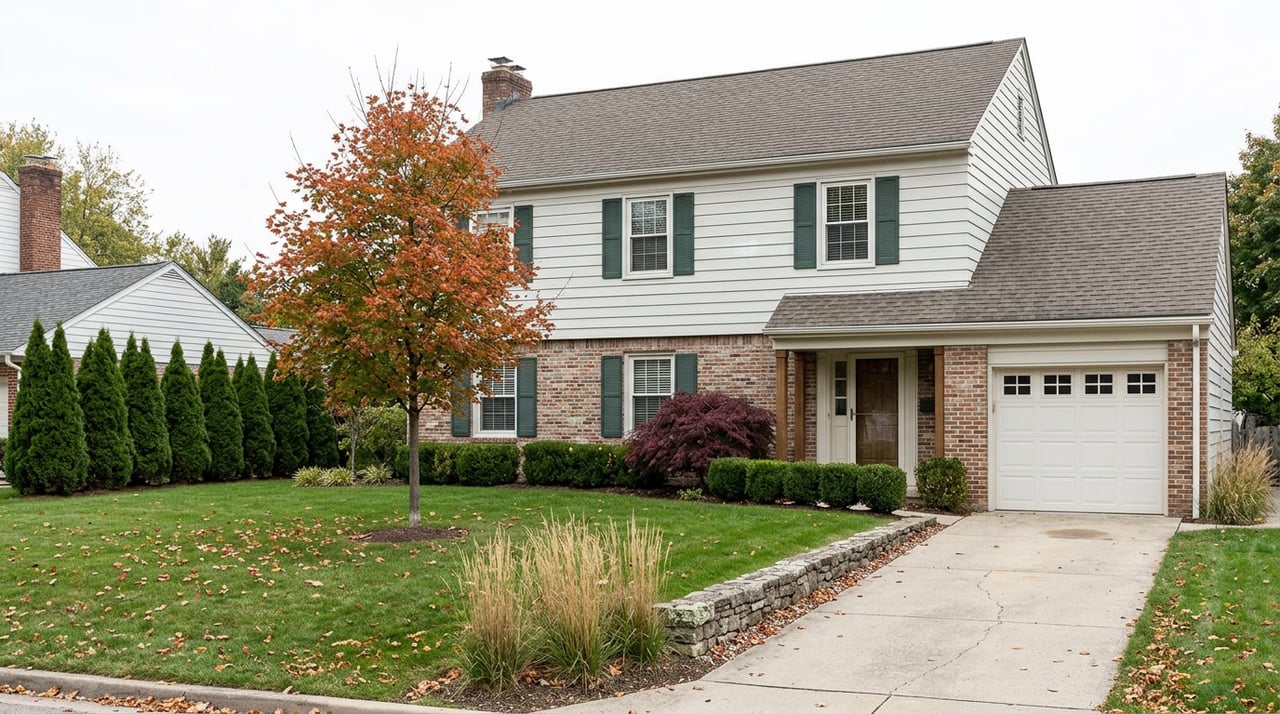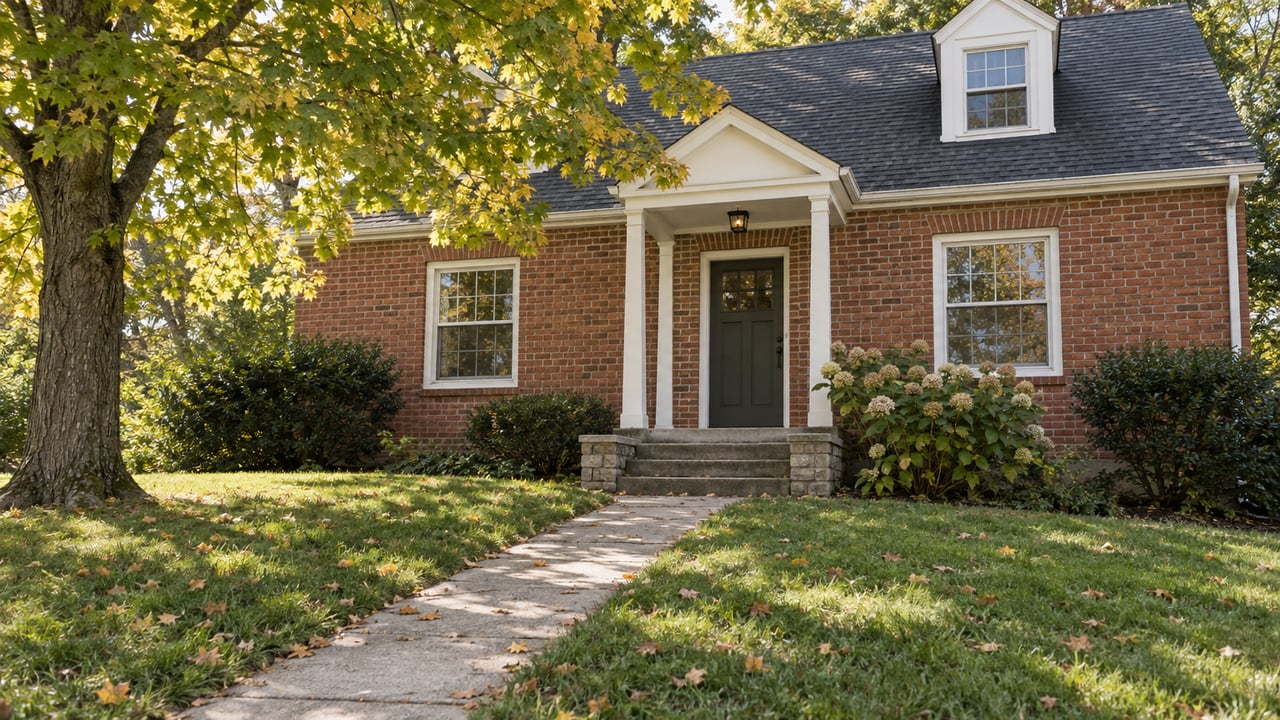
Buy a house in the Mooncrest section of Moon Township and decide to replace a porch roof, add a shed, or swap out a window, and there's a step most buyers elsewhere in the township never encounter. Before any permit gets issued, the owner needs a Certificate of Appropriateness from the township's Historic Architectural Review Board. That requirement exists because Mooncrest carries a designation that almost nowhere else in the township does: it has been listed on the National Register of Historic Places since September 2013, and Moon Township's own building code treats additions, porch alterations, sheds, and demolitions inside its boundary as historic preservation matters, not routine permitting.
A few miles away, on the University Boulevard and Cherrington side of the township, a buyer closing on a brand-new townhome from a national builder handles none of that. Different paperwork, different timeline, different everything, because it's functionally a different housing market wearing the same municipal address.
That's the story a single "median home price" for Moon Township can't tell you, and it's why anyone comparing this township to another suburb on a spreadsheet needs to know which Moon Township they're actually pricing.
What the median is actually averaging
Look up Moon Township's housing numbers across a few sources and the figures won't agree with each other. The Census Bureau's 2024 five-year American Community Survey estimate puts the median owner-occupied home value at $293,000. A separate ranking aggregator, built from an older vintage of the same kind of census data, lists it closer to $259,300. Meanwhile, the most recent twelve months of aggregated sales activity through September 2025 put the median sale price at $393,522, with an average sale price of $383,603, and listings across the township that year ranged from $82,000 up to $4.4 million.
None of those numbers is wrong. They're measuring different things at different points in a township that contains genuinely different housing stock. A five-year rolling census average includes decades of owner-occupied homes across every pocket of Moon, weighted toward whatever has been there longest. A twelve-month sales median captures whatever actually changed hands in that window, and lately that has included a wave of new-construction townhomes priced well above the township's older housing stock. Neither number describes a single, uniform Moon Township, because there isn't one.
The historic district's fine print
Mooncrest was built in 1943 by the Allegheny County Housing Authority under the Federal Public Housing Authority, purpose-built to house workers producing armor plate, munitions, and Landing Ship Tanks at the Dravo Corporation's Neville Island shipyard during World War II. It went up fast: 396 attached units across 106 brick buildings, laid out in seven interconnected loops off a single entrance road, sited atop a bluff overlooking the Ohio River and Neville Island below. Unlike most wartime federal housing, it was built to be permanent, and it was racially integrated from the start, at a time when most government-funded housing of its kind was segregated.
That history is exactly why the National Park Service added it to the National Register in 2013, and why the township's preservation ordinance now governs what an owner can do to the outside of a house there. The homes themselves run smaller than what a 2026 buyer typically expects, a reasonable byproduct of 1940s worker housing standards, and the neighborhood's hilltop, single-entrance layout that once provided a sense of enclosed community has also historically limited its access to nearby grocery stores, transit, and everyday services compared to the rest of the township.
None of that makes Mooncrest a bad place to buy. It makes it a specific kind of purchase, one where a buyer should ask about the historic district rules before assuming the same renovation timeline and scope apply as anywhere else in Moon.
What's rising on the other side of the township
Drive toward University Boulevard and Cherrington and the contrast is immediate. This is the corridor anchored by Robert Morris University, and it's where most of Moon's new-construction activity has landed in the past two years. D.R. Horton's River Ridge community is building townhomes there now, with the Regent floor plan running 2,208 square feet and the larger Andrews plan at 2,691 square feet, both featuring quartz countertops, HardiePlank siding, and finished walkout lower levels, priced through 2026 in roughly the high $300,000s to low $400,000s. Maronda Homes is building in the Cimarron community with its Carlisle model, a 3,136-square-foot two-story priced around $396,000. Ryan Homes has homes going up at Elk Ridge, with models ranging from roughly 2,024 to 2,341 square feet and prices in the mid-$300,000s to high $380,000s.
That's a meaningfully different price point and product than what a fixed-up Mooncrest bungalow or an older ranch elsewhere in the township typically commands, and it's a big part of why the twelve-month sales median has been pulled higher than either census-based figure. New construction sells at new-construction prices, and Moon Township has had a steady supply of it lately.
The commercial backbone supporting that corridor isn't new. University Centre, a shopping center Wampler Development built at University Boulevard and the I-376 Business Loop, brought in tenants including Panera, Five Guys, and Jersey Mike's years ago, and the same developer later built the Airside Business Park nearby. Buyers moving into River Ridge or Cimarron today are landing in a corridor that's had steady commercial investment for a while, not a speculative bet on future development.
Why the airport corridor hasn't discounted values
It's easy to assume that living close to an international airport is a trade-off buyers accept in exchange for a lower price. In Moon Township, the opposite has mostly held true. Part of a large portion of Pittsburgh International Airport's runways and facilities sit inside the township, and rather than depressing demand, the airport has anchored a cluster of major employers that keeps housing demand steady: Robert Morris University's main campus, NOVA Chemicals' U.S. commercial center, FedEx Ground's corporate headquarters, and Dick's Sporting Goods' headquarters are all located in Moon, alongside the Air Force Reserve's 911th Airlift Wing and the Pennsylvania Air National Guard's 171st Air Refueling Wing. Chevron also maintains offices in the township, close enough to the airport that its own relocation materials describe it as roughly ten minutes away.
Flight noise in Moon Township tends to concentrate near University Boulevard rather than spreading evenly across the township, which means the corridor doing the most new-construction building is also the one closest to the runways, and buyers haven't been discounting for it. If anything, the jobs based along that corridor are a large part of why builders keep adding townhomes there.
What this means if you're comparing Moon to somewhere else
If a listing sheet or an online estimate hands you a single number for Moon Township, ask which part of the township it's drawing from before treating it as a benchmark. A median built mostly from older, established housing stock will land closer to the low $300,000s. A median built from recent sales activity, weighted toward the new-construction corridor, will land closer to the high $300,000s or beyond. Both are accurate. Neither is complete on its own.
The same logic applies in reverse for a seller. A Mooncrest owner pricing a home against Zestimate-style aggregates pulled from the whole township risks under- or over-shooting the mark, because those aggregates rarely separate historic-district stock from new construction a few miles away. Getting the comparison right means pulling comps from inside the same pocket of the township, not the township as a whole.
A couple of questions worth asking before you make an offer
Does the Mooncrest historic designation affect financing or insurance? It doesn't change how a mortgage works, but it does mean any exterior renovation plan should be checked against the Certificate of Appropriateness process before you count on it in your budget or timeline.
Are the new-construction communities in the same school district as the rest of the township? Moon Area School District serves the township broadly, including the University Boulevard corridor, so a move between Moon's older neighborhoods and its newer ones typically doesn't require a school change.
Is the airport a factor township-wide or only in certain pockets? Noise exposure has historically clustered near University Boulevard rather than spreading evenly, which is worth asking about directly for any specific address you're considering, regardless of which submarket it falls in.
If you're comparing Moon Township to another Pittsburgh suburb and the numbers you're finding online don't seem to line up with each other, that's not a data error. It means you're looking at two different housing markets that happen to share a municipal boundary, and figuring out which one fits your budget and your renovation plans is worth a conversation before you start touring. The Yot Howley Group can walk you through which pocket of Moon Township actually matches what you're trying to buy. Schedule a consultation when you're ready to sort it out.